
Veterans: No Vet Gets Left Behind Over Money
Translucent figure of a veteran sitting on a staircase in a dark lab, dog tags at his chest, lower back and knee glowing red, worn combat boots beside the stairs

Functional Medicine for Veterans in Dallas, Texas

No Vet Left Behind This November

Play the video: Understanding Veteran Pain, with Dr. Luke Arnett
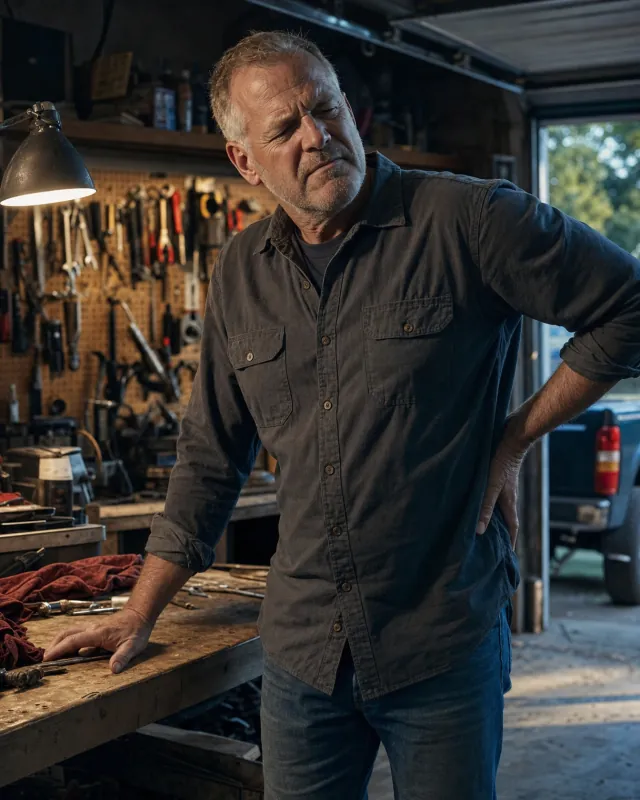
Man in his garage pressing a hand to his lower back

What Most of the Vets We See Tell Us


  • Their back, hips, neck, knees or shoulders hurt, and they feel it on every step up the stairs.
  • By mid-afternoon they're running on fumes. By the time they get home, there's nothing left for the family.
  • They did everything right. They went to the VA, saw other doctors and got sent to specialists.
  • One looked at the x-rays. Another looked at the labs. Both came back normal. Some were sent to a psychiatrist.
  • So many doctors looking at separate pieces, and nobody putting the pieces together.
  • So when someone asks how they're doing, they say "I'm fine."

They're not fine.

There's usually a reason behind it. And it can be found.

Here's What's Actually Happening…
And Why It's Easy to Miss


Pain is a fire alarm. It's the body's signal that something else isn't working right. Quieting the alarm doesn't put out the fire. To find the fire, you have to look at the whole body, and the body is made of three parts that work together.

  • Glowing blue skeleton standing inside a glass cylinder

    01 · The Frame

    Structure

    Bones, joints, muscles and connective tissue. When it's off: stiff out of bed, knees that ache on the stairs, a back that locks up on a long drive, trouble getting up off the floor.

  • Glowing red bloodstream and heart inside a glass cylinder

    02 · What's Inside

    Chemistry

    Nutrients, vitamins, minerals, amino acids and the hormones behind energy, focus and repair. When it's off: inflammation, tired no matter how much sleep, slow to heal, achy for no clear reason, brain fog.

  • Glowing green nervous system inside a glass cylinder

    03 · What It Costs You

    Emotions

    Stress, mood, relationships, and the frustration of not being who you used to be. When it's off: a short fuse, money worries, pulling away from a partner, putting off the kids.

All three run through one stress hormone, cortisol. The body answers back pain, low nutrients and worry about bills the same way. Cortisol is built for short emergencies, but when the stress never lets up, it stays on. Then it keeps muscles tight, slows healing, drives inflammation, wrecks sleep, drains energy and lowers testosterone.

Pain causes stress, and stress causes more pain. That's why fixing one part alone doesn't work.

Dr. Luke Arnett checking a woman's knee movement on an exam table, lab vials in the foreground

Most Clinics Guess. We Test.


Most care looks at one piece at a time: the x-ray, the lab panel, the prescription. If each piece comes back "normal," the search stops there.

We look at all three parts together and test first, because without testing, it's guessing. And if we find something outside what we do, we'll say so straight and point to someone who can help. No runaround.

Dr. Luke Arnett, Zen Functional Medicine, Dallas

Dr. Luke Arnett, DC, LAc, FAAIM, DCBCN


For 28 years, Dr. Arnett has worked with veterans, helping hundreds of them get to the root of what's holding their bodies back. It's personal for him. His father was a veteran who lived this same story, and nobody ever got to the bottom of it. Dr. Arnett decided that wouldn't be the ending for anyone who walks through his door. He holds two diplomate certifications and a fellowship in clinical nutrition.


Aimee Hinshaw, FNP, Zen Functional Medicine, Dallas

Aimee Hinshaw, FNP


Aimee is a dedicated nurse practitioner who provides comprehensive functional medicine care. Focused on evidence-based, integrative medicine, she designs and oversees wellness plans built around each patient's results.

What Happens When You Come In?


  1. Step #1

    The first visit starts with a conversation, not a clipboard.

    We want the whole story: where it hurts, what the days look like, and every doctor and test so far.

  2. Step #2

    We test, so we don't have to guess.

    We look at all three parts:

    • Structure

      Muscle weakness, joint pain and how the body moves.

    • Chemistry

      Advanced lab work on hormones, thyroid, nutrients and inflammation.

    • Emotions

      How hard the body's stress response is running.

    Office visits and lab testing are billed to most major insurance. Insurance or not, we'll work it out. Give us a call.

  3. Step #3

    We walk through the results together.

    No jargon, no rushing. We show what we found and how the pieces connect. If something is outside what we do, we'll point you to someone who can help.

  4. Step #4

    We set the goal and get there together.

    Pain is the last thing to show up and the first thing to leave. When people start feeling better, the urge is to catch up on everything at once. The body needs time to rebuild, so we pace it, track progress and adjust along the way.

No Vet Left Behind This November


All November, money won't leave a vet behind. We bill most major insurance for office visits and lab testing. Insurance or not, we'll work it out. This isn't charity. It was earned a long time ago.

Veterans: Common Questions, Answered


My x-rays and labs came back normal. Why do I still hurt?

Each test looks at one piece. Standard labs are built to catch disease, not the imbalances that wear a body down first. We look at structure, chemistry and stress together.

Why does the pain keep coming back?

Pain is the alarm, not the fire. Until the cause underneath is found, the pain returns once the medication wears off.

What does cortisol have to do with pain?

Pain, low nutrients and everyday worry all raise cortisol. When it stays high, it tightens muscles, slows healing, drives inflammation and drains energy, which creates more pain.

What do you test for?

Muscle strength, joints and movement, advanced lab work on hormones, thyroid, nutrients and inflammation, and how hard the stress response is running.

Do you see women veterans?

Yes. About a quarter of the veterans Dr. Arnett sees are women.

Is the testing covered by insurance?

Office visits and lab testing are billed to most major insurance. Give us a call and we'll check your coverage on the phone.

What if I don't have insurance?

Give us a call. We'll work it out.

What happens after I request an appointment?

Someone from our team texts you right away, then calls to confirm your time and verify your insurance.

Older man kneeling in a backyard at sunset, tossing a football to his grandson

You've Said "I'm Fine" Long Enough


Let's find out what's really going on. Pick a time that works for you, any time, day or night, and we'll follow up as soon as we're in.

Rather talk to a real person first? Questions, insurance, whatever you need, just give us a call.